Boulder toilet repairs usually involve a flapper, fill valve or wax seal, and the city treats replacing a toilet without moving pipes as minor work that doesn't need a permit. Older homes near downtown and the university can add a worn flange or shutoff to the job. Call the number on this page to be connected with a local plumber in Boulder.
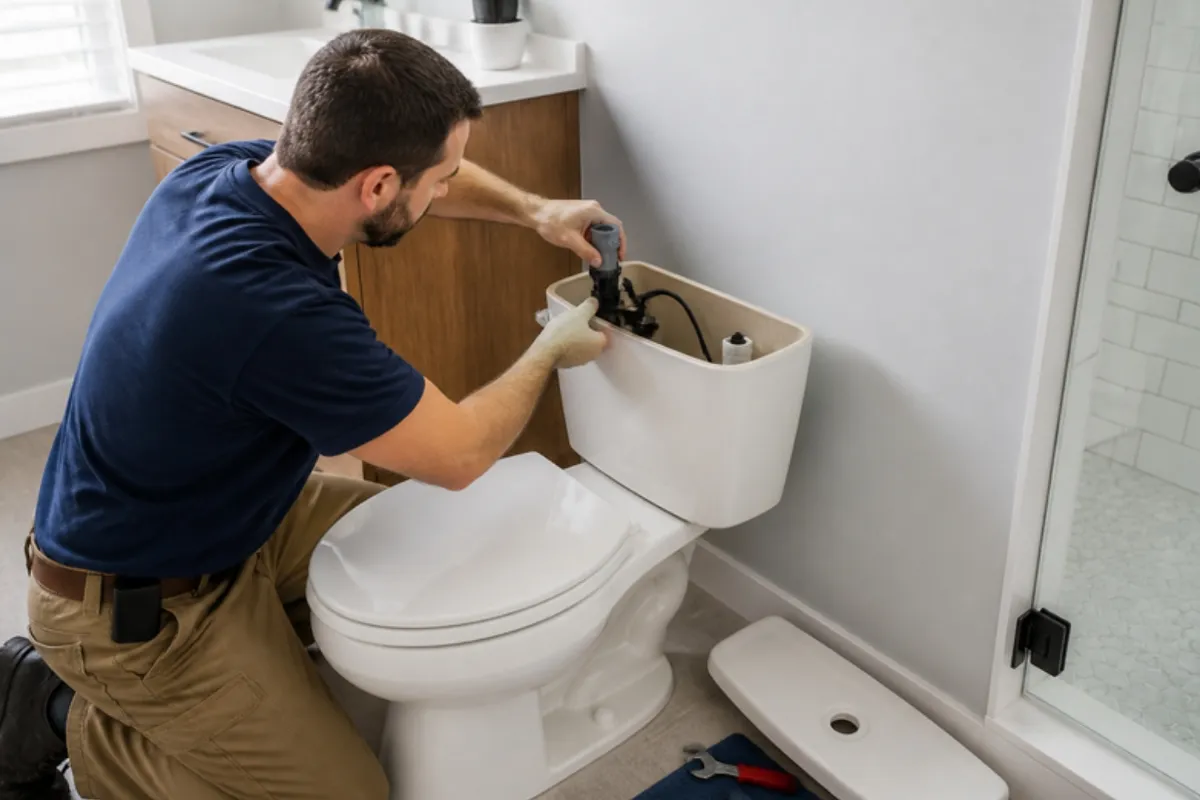
Signs it's time for a repair
- A soft trickle into the bowl that never quite stops
- The tank refills by itself while everyone is out
- Water seeps from the base after each flush
- The toilet moves when you sit
- Drips form under the tank bolts
- One toilet clogs far more often than the others
Local conditions in Boulder
Boulder runs its own water system, drawing from Barker Reservoir, North Boulder Creek, Carter Lake and Boulder Reservoir depending on the season, and treating at the Betasso and 63rd Street plants. The city disinfects with chlorine rather than chloramine and runs a corrosion control program aimed at reducing lead from home plumbing. Its service line inventory found no lead lines in the system, though owners of homes built before 1956 are encouraged to check their pipe material on the city's online map.
That age split shows up in toilet work. Boulder has houses around Chautauqua, the Pearl Street area and the older blocks near campus where the drain fittings under a toilet can be decades older than the fixture itself. In those homes a plumber lifting the bowl may find a flange that has corroded or a closet bend that needs attention. Newer neighborhoods are more likely to need simple tank parts. Wastewater goes to the city's Water Resource Recovery Facility, and the city handles sewer maintenance.
Permits are refreshingly clear here. Planning and Development Services lists clearing drain stoppages, repairing leaks and replacing a toilet without rearranging pipes as exempt minor work. Replacing concealed drain or supply piping counts as new work and needs a permit.
What affects the cost
- Tank or seal: internal parts are quicker than lifting the toilet to reseal it.
- Older fittings: a corroded flange or a stuck angle stop adds parts and time.
- Concealed piping: if pipes in the wall or floor must be replaced, the job needs a permit and more labor.
- Floor damage: a slow leak may have reached the subfloor.
- Clog location: a blockage in the toilet is simpler than one in the building drain.
- Timing: after-hours calls generally cost more.
When you call
The number on this page connects you with an independent plumber who works in Boulder. Explain what the toilet is doing, whether water has reached the floor or a ceiling below, and roughly how old the house is. If the water has to be shut off at the meter after hours, the city asks customers to call 303-441-3200, since only city staff may open meter pits.
Toilet Repair questions in Boulder
Do I need a permit to repair or replace a toilet here?
The shutoff valve behind the toilet won't turn. What now?
Should a toilet that rocks or shifts be fixed right away?
Why does the same toilet keep clogging?
More plumbing services in Boulder
Toilet Repair nearby
Helpful guides
Sources
Last updated: